



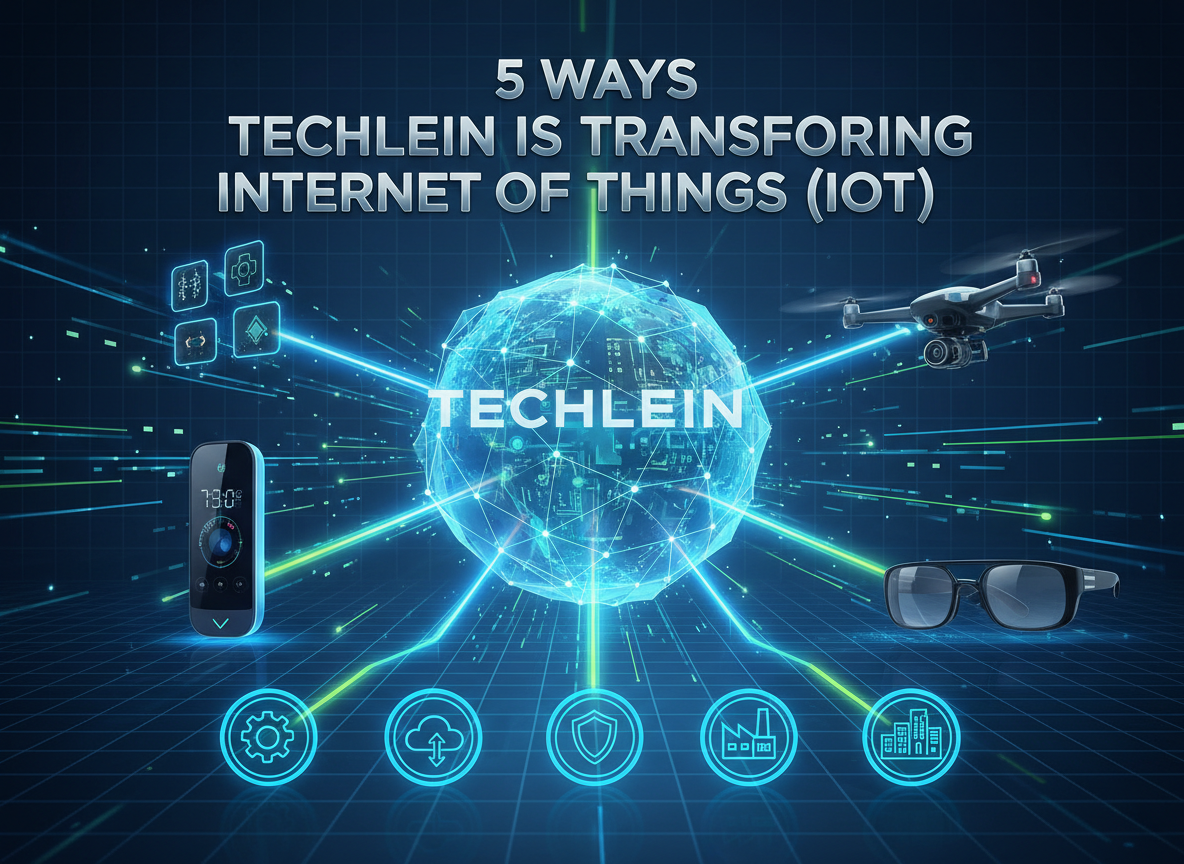
The Internet of Things (IoT) has rapidly evolved from a futuristic concept into the backbone of modern efficiency. Smart thermostats regulate our homes, industrial sensors predict machinery failures before they happen, and connected wearables monitor our health in real-time. Yet, despite this massive adoption, the IoT landscape still faces significant hurdles: fragmentation, security vulnerabilities, and data overload.
This is where Techlein enters the picture. As a rising force in the technology sector, Techlein isn’t just participating in the IoT ecosystem; they are actively reshaping it. By addressing the critical pain points that have historically slowed down mass adoption, they are building a more cohesive, secure, and intelligent network of devices.
In this article, we will explore five specific ways Techlein is transforming the Internet of Things, moving beyond basic connectivity to create a truly integrated digital world.
1. Revolutionizing Connectivity with Mesh Architecture
One of the biggest challenges in IoT has always been maintaining a stable connection across a vast number of devices. Traditional hub-and-spoke models often create bottlenecks. If the central hub fails or gets overloaded, the entire network suffers.
Techlein is tackling this head-on with their proprietary advancements in mesh networking architecture. Instead of relying on a single central router, Techlein-enabled devices communicate directly with one another. This creates a dynamic web of connectivity where data can take multiple paths to reach its destination.
The Self-Healing Network
Imagine a smart factory floor equipped with hundreds of sensors monitoring temperature, vibration, and output. In a standard setup, if a repeater goes down, a “dead zone” appears, leaving critical machinery unmonitored.
With Techlein’s mesh technology, the network is self-healing. If one node drops offline, the surrounding devices instantly reroute data through alternative paths. This ensures zero downtime for critical industrial applications. For businesses, this reliability translates directly to revenue protection. A stable connection means continuous monitoring, which allows for predictive maintenance rather than costly reactive repairs.
Extending Range Without Extra Hardware
This approach also solves the range anxiety often associated with smart home setups. Techlein devices act as repeaters themselves, extending the signal to the furthest corners of a property without the need for expensive WiFi extenders. This democratization of connectivity is crucial for rural applications, such as smart agriculture, where sensors need to cover acres of land without complex infrastructure.
2. Setting a New Standard for IoT Security at the Chip Level
Security is the elephant in the room for IoT. From hacked baby monitors to compromised smart fridges used in botnet attacks, the vulnerability of connected devices is a well-documented risk. Techlein is transforming this narrative by embedding security directly into the hardware, rather than treating it as a software afterthought.
Immutable Hardware Roots of Trust
Techlein integrates an “Immutable Root of Trust” into their IoT chipsets. This means that the device’s identity is cryptographically locked at the manufacturing stage. A hacker cannot spoof the device’s identity because they cannot replicate the physical hardware signature.
This level of security is a game-changer for the healthcare sector. Consider remote patient monitoring devices that transmit sensitive heart rate or blood sugar data. With Techlein’s hardware-level encryption, patients and providers can trust that the data has not been intercepted or tampered with during transmission.
Automated Firmware Integrity Checks
Beyond identity, Techlein devices perform automated integrity checks every time they boot up. If the system detects that the firmware has been altered or corrupted by malware, it refuses to run and reverts to a safe, factory-verified version. This “pre-boot” protection stops attacks before they can even execute code, providing enterprise-grade security for consumer-level devices.
3. Democratizing Advanced Data Analytics with Edge Computing
We are generating more data than we know what to do with. Sending every single byte of data from a smart device to the cloud for processing is inefficient, costly, and creates latency. Techlein is solving this by pushing intelligence to the “edge”—processing data right on the device itself.
Real-Time Decision Making
Techlein’s new generation of IoT processors are powerful enough to run lightweight AI algorithms locally. This is transformative for autonomous systems.
Take the example of smart traffic management in a busy city. Traditional cameras send video feeds to a central server to count cars and adjust traffic lights. This takes time. A Techlein-powered traffic camera analyzes the video feed locally. It recognizes an ambulance approaching and changes the light to green instantly. That split-second decision, made possible by edge computing, can save lives.
Reducing Cloud Costs for Businesses
For businesses, the benefit is financial. By filtering and processing data locally, companies only need to send the most critical insights to the cloud. This drastically reduces bandwidth usage and cloud storage costs. A logistics company tracking a fleet of trucks doesn’t need to know the GPS location every second if the truck is parked. Techlein’s intelligent sensors simply report “Parked” and stop transmitting data until movement is detected, optimizing operational costs.
4. Bridging the Gap with Universal Device Integration
The IoT world is notoriously fragmented. You have devices that speak Zigbee, others that speak Z-Wave, and some that only work on WiFi or Bluetooth. Consumers and businesses are often locked into specific ecosystems, unable to make their favorite devices talk to each other.
Techlein is acting as the universal translator. They have developed a middleware platform that is protocol-agnostic. This platform sits between different devices and translates their specific languages into a unified communication stream.
The Truly Unified Smart Home
This means a consumer can finally have a seamless experience. A Techlein hub can take a signal from a Z-Wave motion sensor and use it to turn on a WiFi smart bulb, while simultaneously lowering the temperature on a Bluetooth-connected thermostat.
This interoperability is vital for commercial real estate managers. They often inherit buildings with legacy systems—old HVAC controllers, security alarms from ten years ago, and modern smart lighting. Techlein’s integration capabilities allow these disparate systems to be managed from a single dashboard, removing the need to rip and replace expensive infrastructure.
5. Prioritizing User Experience (UX) with Intuitive Interfaces
For years, IoT interfaces have been designed by engineers for engineers. They are often complex, cluttered, and difficult for the average person to navigate. Techlein believes that for IoT to be truly transformative, it must be invisible. The technology should work so well that the user barely notices it.
Techlein is pioneering “Intent-Based Interfaces.” Instead of presenting users with a dashboard full of raw data (like “Temperature: 72°F, Humidity: 45%”), their systems focus on the user’s intent.
Context-Aware Automation
Instead of asking a user to program a complex schedule for their smart lights, a Techlein system learns from behavior. It notices that you always dim the lights and turn on the TV at 8:00 PM. After a few days, it simply asks via a push notification: “Would you like me to set up a ‘Movie Mode’ for evenings?”
This shift from manual programming to proactive suggestion lowers the barrier to entry. It makes smart technology accessible to elderly users who might be intimidated by complex apps.
Visualizing the Invisible
Furthermore, Techlein is using Augmented Reality (AR) to improve how we interact with industrial IoT. Technicians repairing a smart generator can point their tablet at the machine. Techlein’s app overlays real-time data—temperature readings, pressure levels, and maintenance alerts—directly onto the image of the machine. This allows for faster diagnosis and repair, merging the digital data seamlessly with the physical world.
Conclusion
The Internet of Things is no longer just about connecting things to the internet; it is about connecting them intelligently, securely, and usefully. Techlein is driving this next phase of evolution.
By creating self-healing mesh networks, securing devices at the chip level, processing data at the edge, bridging protocol gaps, and humanizing the user interface, Techlein is solving the hard problems that have held the industry back.
For businesses, this means greater efficiency and lower costs. For consumers, it means a smart home that finally works as promised. As Techlein continues to innovate, we can expect a future where technology doesn’t just surround us, but actively supports and enhances our daily lives in ways we are only just beginning to imagine.
Ready to upgrade your infrastructure?
Explore how Techlein’s solutions can fit into your current ecosystem by visiting their developer portal or scheduling a demo with their enterprise team today.