



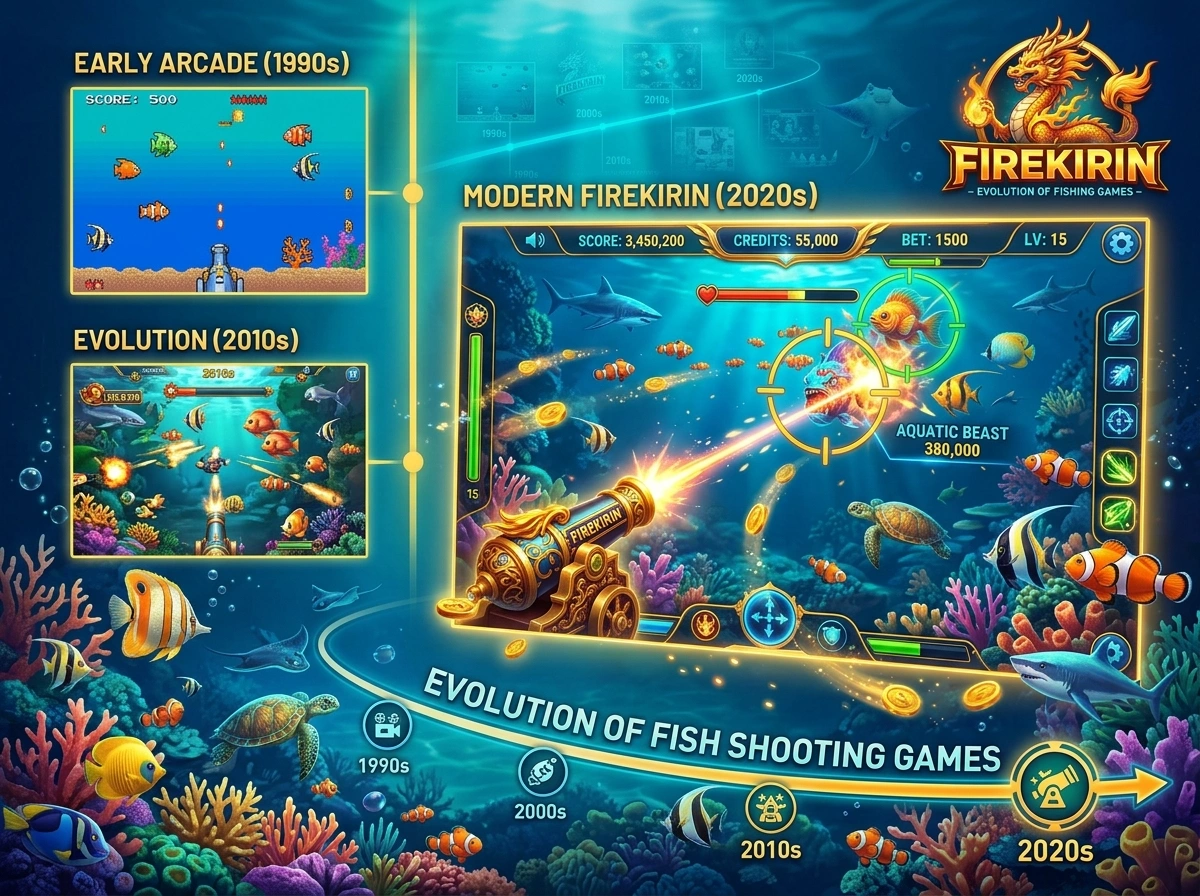
Few arcade genres have traveled as far as fish shooting games. What started as a niche cabinet tucked in the corner of an Asian game center has grown into one of the most recognizable styles of skill-based play in the United States. If you have ever aimed a cannon at a swirling school of digital fish, you have touched a piece of gaming history that spans two decades and several continents.
In this article, we will trace that journey from its arcade roots to today’s online fish table games. You will learn how the genre crossed oceans, why American players embraced it, and where FireKirin sits in that story.
The Origins of Fish Shooting Games in Asian Arcades
Fish shooting games first surfaced in Asian arcades in the mid-2000s. The concept was refreshingly simple: players controlled a cannon at the bottom of the screen and fired at fish drifting across a vibrant underwater scene. Bigger fish were worth more points but took more shots to catch, so every round became a quick math problem about risk and reward.
These early machines were social by design. Multiple players sat around a shared table-style screen, competing for the same swimming targets. That communal energy set fish shooting games apart from solo arcade titles and helped them spread quickly across game centers in China, Japan, and Southeast Asia.
The appeal came down to a clever mix of action and decision-making. You needed sharp reflexes, but you also needed strategy to manage your ammunition and chase the highest-value catches. That blend laid the foundation for everything that followed.
The Transition to Online and Mobile Platforms
As smartphones became standard in nearly every pocket, developers saw an obvious opportunity. The same gameplay that worked on a physical cabinet translated beautifully to a touchscreen. Tapping to aim and fire felt natural, and suddenly the arcade fit in your hand.
This shift changed the genre in three important ways:
- Access expanded. You no longer needed to visit an arcade. A few taps opened a full underwater world anytime, anywhere.
- Graphics improved fast. Mobile hardware advanced quickly, so developers added richer animations, dynamic lighting, and detailed sea creatures.
- Play became persistent. Online accounts let players track progress, save rewards, and return to the action without losing momentum.
Why does this matter? Because the move online turned a regional arcade favorite into a global category. Fish shooting games could now reach anyone with a phone and a Wi-Fi connection, and that reach set the stage for their American arrival.
The Rise of Skill-Based Gaming in the U.S. Market
The United States has a complex regulatory environment, and that environment shaped how fish shooting games entered the market. Many states draw a clear line between games of pure chance and games of skill. Fish shooting titles sit firmly on the skill side, since outcomes depend on your aim, timing, and shot selection.
That distinction resonated with American players who wanted more agency than a typical slot-style game offered. Skill-based gaming rewards practice and strategy, which appeals to a competitive culture that already loves esports, fantasy sports, and high-score chasing.
Tech adoption in the U.S. is high across nearly every demographic, so the infrastructure was ready. Fast mobile networks, powerful devices, and comfortable digital payment habits all made it easy for arcade fish games to find an audience across the country. From California to the East Coast, players started discovering a genre that felt both familiar and fresh.
How FireKirin Emerged as a Leading Fish Shooting Game Platform in the USA
FireKirin arrived as the genre was hitting its stride in America, and it timed that entry well. Instead of offering a single game, FireKirin built a platform that bundled multiple fish shooting titles alongside other skill-based options. That variety gave players a reason to stay, explore, and return.
A few factors helped FireKirin stand out from the crowd:
- A multi-game library. Players could switch between different fish shooting experiences without downloading separate apps.
- Cross-device access. The platform worked across phones, tablets, and desktops, matching the high-tech expectations of U.S. users.
- A community feel. Shared leaderboards and competitive play preserved the social spirit of those original arcade cabinets.
The result was a brand that grew through word of mouth. As more players in different regions tried it, FireKirin built recognition as a go-to name for online fish table games in the United States.
Key Features That Make FireKirin Stand Out
So what keeps players coming back? It comes down to three pillars: graphics, gameplay, and rewards.
Graphics and Visual Design
FireKirin leans heavily into immersive underwater visuals. Schools of fish move with realistic motion, boss creatures arrive with dramatic flair, and the color palette stays bright and inviting. Strong visual feedback, like the burst of an effect when you land a big catch, makes every shot satisfying.
Gameplay and Skill Mechanics
The core loop stays true to the genre’s strategic roots. You manage ammunition, choose targets wisely, and weigh fast points against bigger payoffs. Higher-value fish demand precise timing and patience, which rewards skill over luck. Special weapons and power-ups add fresh decisions without overcomplicating the experience.
Rewards and Progression
A clear reward system gives players short-term and long-term goals. Hitting rare targets, climbing leaderboards, and unlocking new content all create momentum. This sense of progress keeps sessions engaging and gives players a reason to sharpen their aim over time.
The takeaway: FireKirin succeeds because it respects what made fish shooting games fun in the first place while polishing it for modern American players.
A Quick Note on Common Misconceptions
New players sometimes assume fish shooting games are purely about chance. In reality, your performance hinges on aim, ammo management, and target selection. Treat it like a skill you build, not a coin flip, and your results improve.
It is also worth remembering that gaming regulations vary by state. Always check the rules where you live and play responsibly. Responsible play keeps the experience enjoyable and stress-free.
The Future of Fish Shooting Games in America
The genre shows no signs of slowing down. Several trends point toward continued growth:
- Better technology. Advances in mobile hardware and graphics will push visual quality even higher.
- Deeper social features. Expect more tournaments, team play, and live competition that recapture the arcade’s communal buzz.
- Smarter design. Developers will keep refining skill mechanics to reward strategy and keep play fair.
As technology advances and player tastes evolve, platforms that adapt quickly will lead the pack. FireKirin’s platform-based approach positions it well to grow alongside these shifts, especially as American audiences continue to embrace skill-based gaming.
Key Takeaways
- Fish shooting games began in Asian arcades, built on a clever mix of action and strategy.
- The move to mobile and online play turned a regional favorite into a global category.
- U.S. players embraced the genre because it rewards skill, not just chance.
- FireKirin rose to prominence by offering a multi-game platform with strong graphics, satisfying gameplay, and clear rewards.
- The future points toward better tech, richer social features, and continued growth.
Final Thoughts
Fish shooting games have come a long way from those crowded arcade cabinets, and the genre keeps reinventing itself for new audiences. FireKirin fits into that story as a platform that honors the originals while delivering a modern, skill-driven experience for U.S. players.
Ready to see how far your aim can take you? Explore a few rounds, study your shot selection, and discover why arcade fish games keep winning fans across America. Just remember to check your local rules and play responsibly.
Please visit official site for more info.