



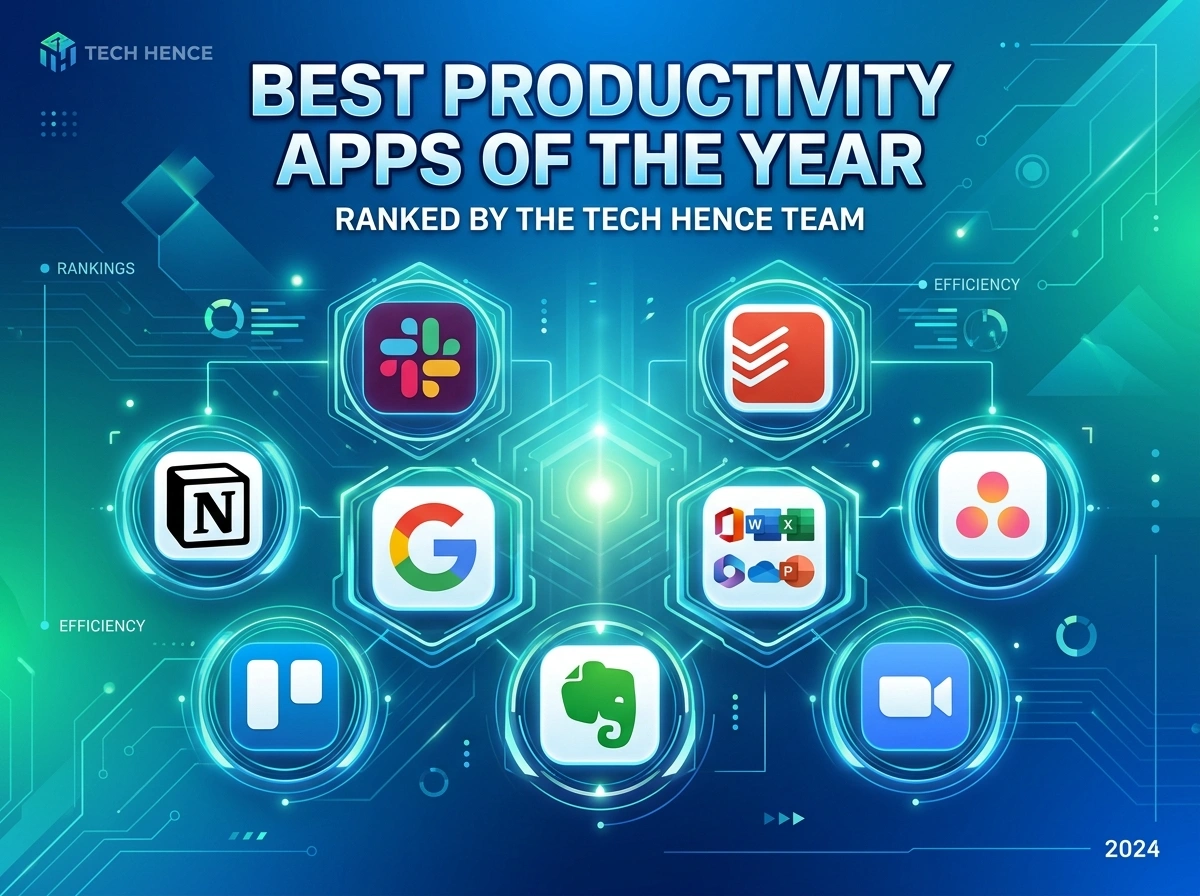
Work looks different than it did just a few years ago. Remote teams span time zones, hybrid schedules shift week to week, and the pressure to do more with less has never been higher. The right software makes all of that manageable. The wrong software just adds another tab you forget to close.
That’s why our team spent months testing, comparing, and living inside dozens of tools. We looked at ease of use, pricing, integrations, and whether an app actually saves time instead of eating it. Whether you’re a solo freelancer in Austin, a startup founder in the Bay Area, or a project manager coordinating a coast-to-coast team, this ranked list has something for you.
Here are the best productivity apps of the year, ordered by how much value they deliver.
1. Notion
Notion earns the top spot because it does the work of five separate apps. Notes, databases, wikis, project boards, and docs all live in one flexible workspace. You build it to match how your brain works, not the other way around.
Key features: Customizable pages and templates, relational databases, real-time collaboration, and a growing set of AI writing tools built right in.
Pros:
- One tool replaces several, which cuts your monthly software bill
- Templates for nearly every use case, from content calendars to CRMs
- Clean interface that scales from personal notes to full company wikis
The learning curve is real, but once it clicks, most people never look back.
2. ClickUp
ClickUp bills itself as the app to replace them all, and for project-heavy teams it comes close. Tasks, docs, goals, and dashboards sit under one roof with deep customization at every level.
Key features: Multiple project views (list, board, calendar, Gantt), time tracking, automation, and goal tracking.
Pros:
- Incredible value for the price, with a generous free tier
- Highly flexible for teams that outgrow simpler tools
- Strong reporting for managers who need visibility
3. Slack
Email killed focus for a generation of office workers. Slack brought conversation back to something faster and more organized. Channels keep projects tidy, and integrations pull your whole toolkit into one window.
Key features: Organized channels, threaded conversations, voice and video huddles, and thousands of app integrations.
Pros:
- Cuts internal email dramatically
- Connects with almost every tool your team already uses
- Search makes finding old decisions painless
For distributed teams across different states and schedules, Slack keeps everyone in sync without endless meetings.
4. Google Workspace
Sometimes the classics win. Google Workspace remains the backbone of countless American businesses because it just works. Docs, Sheets, Gmail, Drive, and Meet all connect seamlessly and run in any browser.
Key features: Real-time document collaboration, generous cloud storage, shared calendars, and enterprise-grade security.
Pros:
- Almost no learning curve since most people already know it
- Rock-solid reliability and cross-device access
- Built-in security and admin controls that satisfy compliance needs
5. Todoist
If you want a task manager that respects your time, Todoist is hard to beat. It stays simple on the surface while packing serious power underneath. Type a task in plain language and it sorts the date and priority for you.
Key features: Natural language input, project labels and filters, recurring tasks, and a productivity trends dashboard.
Pros:
- Fast, clean, and available on every platform you own
- Smart scheduling that reduces manual setup
- Affordable premium tier
For a deeper look at how tools like these stack up in real-world use, the reviews over at tech hence offer helpful, hands-on breakdowns.
6. Trello
Trello made the Kanban board mainstream, and it’s still the friendliest way to visualize work. Drag cards across columns as tasks move from idea to done. The visual layout makes it perfect for people who think in pictures.
Key features: Kanban boards, customizable cards, Power-Ups for added functionality, and simple automation through Butler.
Pros:
- Almost zero setup time
- Great for small teams and personal projects
- Visual progress that anyone can understand at a glance
7. Microsoft To Do
For anyone already living in the Microsoft ecosystem, To Do is a quiet standout. It syncs with Outlook, integrates with Teams, and offers a clean daily planner called My Day that keeps you focused on what matters now.
Key features: My Day smart planner, Outlook task sync, shared lists, and reminders across devices.
Pros:
- Completely free
- Deep integration with Microsoft 365
- Simple enough for daily personal use
8. Evernote
Evernote pioneered digital note-taking, and it still excels at capturing everything in one searchable place. Clip articles, scan documents, snap photos, and record voice memos, then find them all in seconds.
Key features: Web clipper, document scanning, powerful search including text inside images, and cross-device sync.
Pros:
- Best-in-class search across every note type
- Great for research and reference libraries
- Reliable capture from almost any source
9. RescueTime
You can’t fix what you don’t measure. RescueTime runs quietly in the background and shows exactly where your hours go. The results can be humbling, but they’re the first step toward real change.
Key features: Automatic time tracking, focus sessions that block distractions, detailed reports, and daily goal setting.
Pros:
- Honest, automatic data with no manual logging
- Distraction blocking that protects deep work
- Weekly reports that reveal hidden time drains
10. Forest
Forest rounds out the list with a clever twist on focus. Plant a virtual tree, and it grows while you stay off your phone. Leave the app early and the tree dies. It sounds simple, yet it works surprisingly well.
Key features: Gamified focus timer, virtual forest that grows over time, and a partnership that plants real trees.
Pros:
- Fun, motivating approach to beating phone addiction
- Real-world tree planting adds purpose
- Affordable one-time purchase on most platforms
How to Choose the Right App for You
No single app fits every person or every team. Solo workers often thrive with lightweight tools like Todoist or Forest. Growing teams usually need the structure of ClickUp, Slack, or Notion. Larger organizations lean on Google Workspace or Microsoft To Do for security and familiarity.
Start by naming your biggest bottleneck. Is it scattered notes? Missed deadlines? Too many meetings? Wasted hours? Pick the tool that solves that specific problem first, then expand only when you feel a real need. Stacking too many apps at once is a fast way to burn out and abandon them all.
Also weigh how each tool fits your existing setup. An app that connects with the software you already use will always beat a slightly better tool that lives on its own island.
The Bottom Line
Productivity software isn’t about doing more for the sake of it. It’s about protecting your time, clearing mental clutter, and freeing you to focus on work that actually matters. Every app on this list earns its place by doing exactly that in its own way.
Our advice is simple: choose one, commit to it for a few weeks, and build the habit before adding anything else. The best tool is the one you’ll actually open every morning. Try a couple of our top picks, see what sticks, and get ready to make this your most productive year yet.