



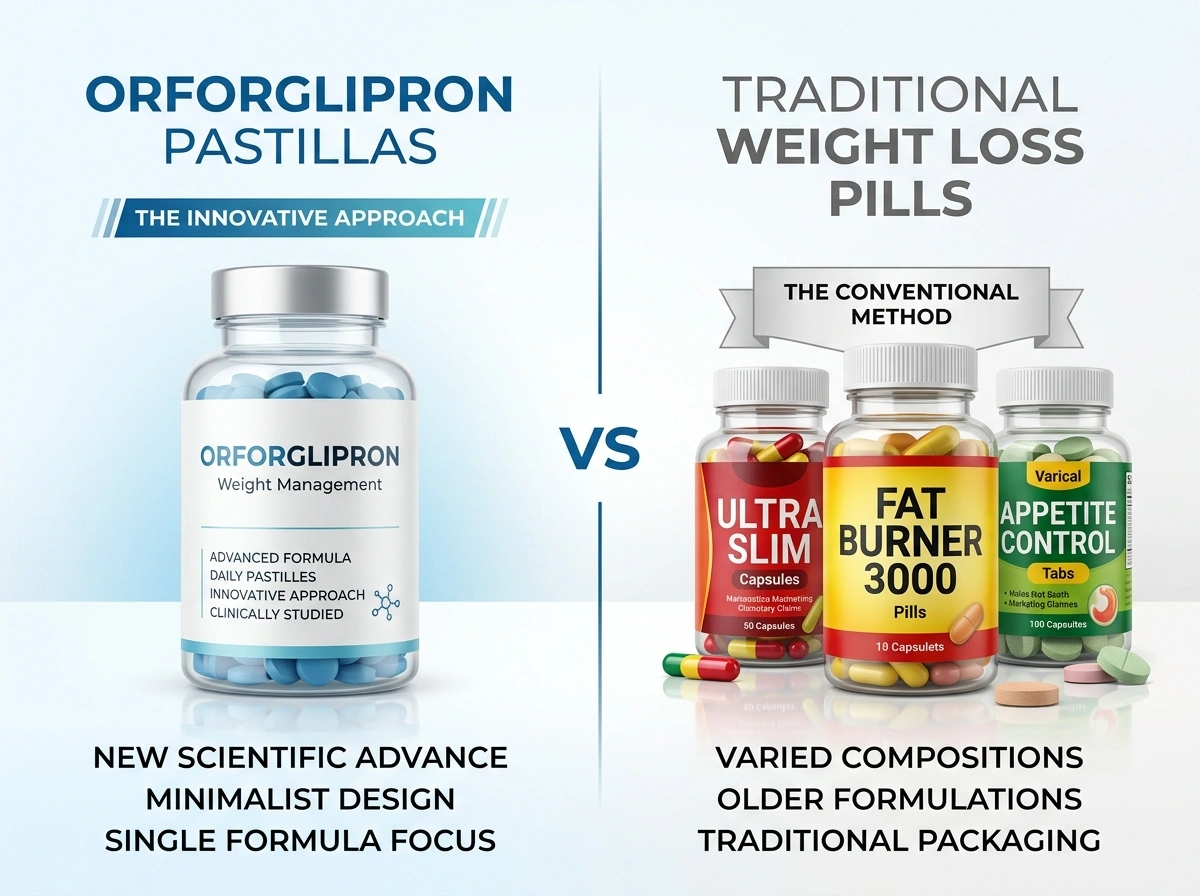
Choosing a weight loss aid has never felt more complicated. New options keep arriving, each promising faster results with fewer headaches. Among the most talked-about newcomers are orforglipron pastillas, an oral medication that works very differently from the diet pills people have relied on for decades. So how do they actually stack up?
This article breaks down the real differences between orforglipron and traditional weight loss pills. We’ll look at how each works, how effective they are, their side effects and safety, plus accessibility and cost. By the end, you’ll have a clearer picture of which approach might fit your goals.
Quick takeaways:
- Orforglipron targets appetite hormones, while many traditional pills target metabolism or fat absorption.
- Newer GLP-1 options often show stronger, more consistent results in studies.
- Safety profiles, cost, and access differ significantly between the two.
What Are Orforglipron Pastillas?
Orforglipron is an oral GLP-1 receptor agonist. In plain terms, it mimics a natural gut hormone called GLP-1, which helps control hunger and blood sugar. When this hormone signal is active, you feel full sooner and stay satisfied longer.
What makes it notable is the delivery method. Many GLP-1 medications require injections, but orforglipron comes as a daily tablet. That single difference removes a major barrier for people who dislike needles. You can learn more about the product through resources on orforglipron pastillas.
Takeaway: Orforglipron offers hormone-based appetite control in a convenient pill form.
What Counts as a “Traditional” Weight Loss Pill?
Traditional weight loss pills cover a broad category. Some are prescription medications, while others sit on pharmacy shelves as over-the-counter supplements. Common examples include:
- Fat blockers (like orlistat), which reduce how much dietary fat your body absorbs.
- Appetite suppressants (like phentermine), which act on the central nervous system to curb hunger.
- Stimulant-based supplements, which aim to boost metabolism and energy.
These products have existed for years, and many people recognize their names. But “familiar” doesn’t always mean “more effective.” Their results and safety vary widely depending on the active ingredient.
Takeaway: Traditional pills are a mixed group with very different mechanisms and outcomes.
Mechanism of Action: How They Work
This is where the two approaches truly diverge.
Orforglipron’s approach
Orforglipron works with your body’s hormone signals. By activating GLP-1 receptors, it slows stomach emptying and reduces appetite at the source. The result is a natural drop in calorie intake without constant willpower battles. It also supports better blood sugar regulation, which adds value for people managing prediabetes or type 2 diabetes.
Traditional pills’ approach
Traditional pills often take a more mechanical or stimulant-driven route. Fat blockers stop fat from being absorbed, which can cause digestive side effects. Stimulant suppressants speed up your system, which may raise heart rate and blood pressure. These methods can work, but they don’t address hunger hormones directly.
Takeaway: Orforglipron treats appetite biologically, while many traditional pills rely on blocking, burning, or stimulating.
Effectiveness: Which Delivers Better Results?
Effectiveness is usually the deciding factor, and the evidence tells an interesting story.
GLP-1 medications, including orforglipron, have shown meaningful and consistent weight reduction in clinical trials. Participants often lose a noticeable percentage of body weight over several months, and the effect tends to hold while taking the medication.
Traditional pills produce more modest results on average. Fat blockers may help, but only when paired with a low-fat diet. Stimulant supplements often show small short-term changes that fade once tolerance builds. Many over-the-counter options also lack strong clinical backing.
That said, individual results always vary. Genetics, diet, activity level, and consistency all shape the outcome.
Takeaway: Orforglipron generally shows stronger, more reliable results, while traditional pills tend to deliver smaller or inconsistent effects.
Side Effects and Safety Profile
No weight loss aid is free of trade-offs. Understanding the risks helps you make a confident choice.
Orforglipron side effects
Because it acts on the gut, the most common complaints are digestive. These include:
- Nausea
- Mild stomach upset
- Reduced appetite that feels strong at first
These effects often ease as your body adjusts. Since it isn’t a stimulant, it doesn’t carry the same heart-related concerns as some traditional options.
Traditional pill side effects
Side effects depend heavily on the type:
- Fat blockers can cause oily stools, urgency, and digestive discomfort.
- Stimulant suppressants may trigger jitters, insomnia, raised heart rate, or elevated blood pressure.
- Unregulated supplements carry hidden risks because their ingredients aren’t always tested or verified.
Takeaway: Orforglipron’s side effects are mostly digestive and temporary, while traditional pills range from mild to cardiovascular concerns, especially with stimulants.
Accessibility: How Easy Are They to Get?
Access can shape your decision as much as effectiveness.
Orforglipron, as a prescription GLP-1 medication, typically requires a consultation with a healthcare provider. This adds a step, but it also means professional oversight and a treatment plan tailored to you. Its pill format makes daily use simpler than injectable alternatives.
Traditional pills are often easier to obtain. Many supplements are available without a prescription, and prescription suppressants are widely known. However, easy access doesn’t guarantee quality or safety, particularly with online supplements that skip regulatory checks.
Takeaway: Traditional pills win on convenience of access, but orforglipron offers medical guidance and a needle-free experience.
Cost: What Should You Expect to Pay?
Budget matters, and the two categories sit at different price points.
Orforglipron, being a newer prescription option, generally costs more upfront. Insurance coverage varies, and out-of-pocket prices can be significant depending on your location and plan. For many, the stronger results justify the investment.
Traditional pills span a wide range. Over-the-counter supplements can be inexpensive, while prescription suppressants fall in the middle. The catch is value: a cheaper pill that delivers little may cost more over time than an effective treatment.
Takeaway: Traditional pills are usually cheaper per bottle, but orforglipron may offer better value relative to results.
Side-by-Side Summary
| Factor | Orforglipron Pastillas | Traditional Weight Loss Pills |
|---|---|---|
| Mechanism | GLP-1 appetite control | Fat blocking or stimulant-based |
| Effectiveness | Strong, consistent | Modest, variable |
| Side effects | Mostly digestive, temporary | Digestive or cardiovascular |
| Access | Prescription, oral | Often OTC or prescription |
| Cost | Higher upfront | Lower, but variable value |
Which Option Is Right for You?
The best choice depends on your priorities. If you want strong, hormone-based results and don’t mind a prescription process, orforglipron may suit you well. If you prefer something inexpensive and easy to grab, a traditional option might appeal—though you should weigh its limitations carefully.
Ask yourself: Do you value stronger results, or quicker access and lower cost? Your honest answer points you toward the right path. And no matter which you lean toward, a conversation with your doctor ensures the choice fits your health profile.
Final Thoughts
Orforglipron pastillas and traditional weight loss pills solve the same problem in very different ways. Orforglipron works with your body’s appetite hormones, delivering consistent results with mostly temporary, digestive side effects—but at a higher cost and through a prescription. Traditional pills offer easier access and lower prices, yet their effectiveness and safety vary widely.
The smart move is to match the option to your goals, budget, and medical needs. Start by talking with a healthcare provider, review the evidence, and choose the approach you can stick with safely over the long term. Sustainable weight management is a marathon, not a sprint—and the right tool makes the journey far easier.