



Picking a volume bot is a bigger decision than it looks. The right tool can save you hours, sharpen your trading activity, and give your project the visibility it needs. The wrong one can drain your budget, expose your wallet to risk, or simply fail to deliver what it promised. With so many options on the market, it pays to slow down and ask the right questions before you sign up.
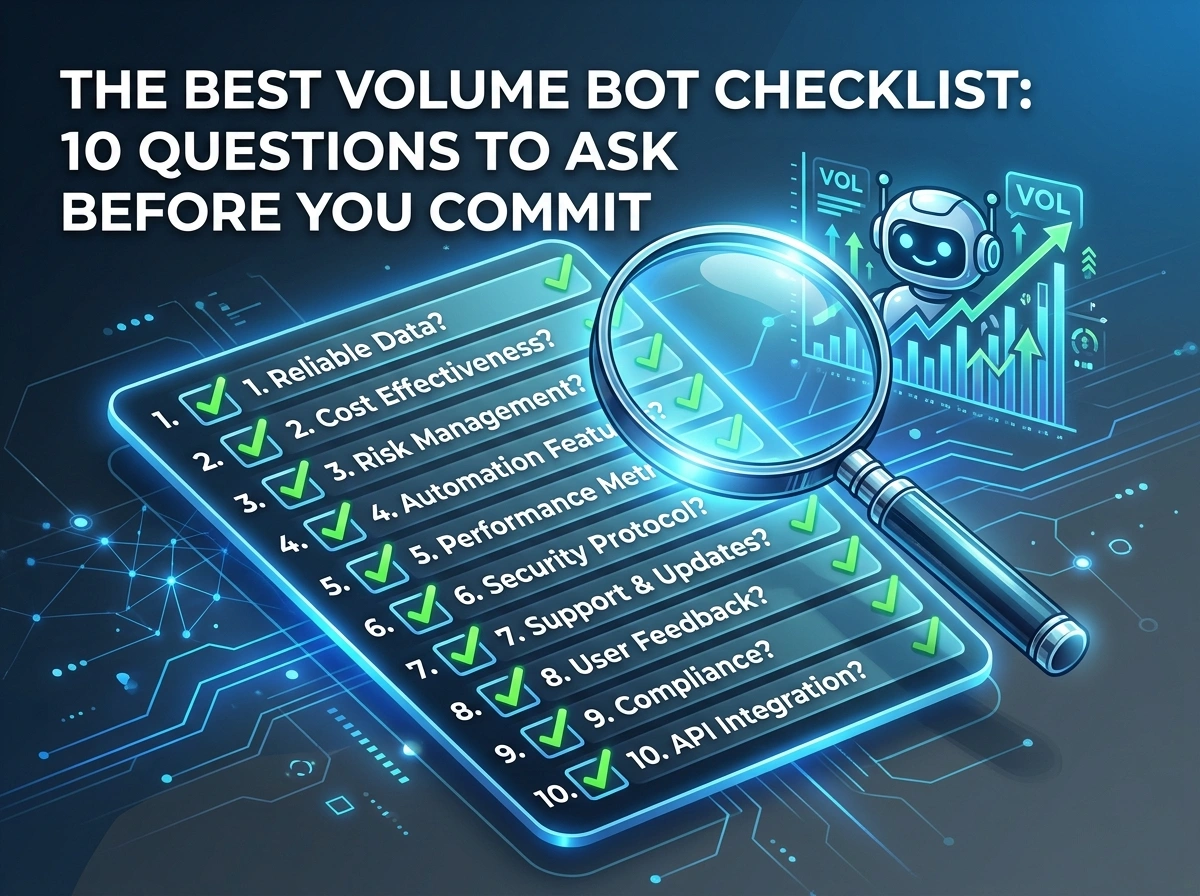
This checklist walks you through ten practical questions to ask any volume bot provider. Run through each one carefully, and you’ll have a much clearer picture of whether a tool deserves your trust. Let’s get into it.
1. What exactly does the bot do?
Start with the basics. “Volume bot” means different things to different providers. Some focus on generating trading volume across token pairs. Others bundle in market-making, transaction simulation, or holder distribution features. Before anything else, get a plain-language explanation of the core function.
A good provider won’t hide behind vague marketing. They’ll tell you precisely what the bot automates, what it cannot do, and where it fits in your wider strategy. If you can’t get a straight answer, treat that as a warning sign.
2. Which blockchains and platforms does it support?
Not every bot works everywhere. Some are built specifically for Solana and Pump.fun launches, while others target Ethereum, BNB Chain, or multiple networks at once. Make sure the bot supports the chain and platform you actually use.
Check the depth of that support too. A bot that “technically” works on a network but lacks proper integration may give you slow performance and missed transactions. Native support almost always beats a bolted-on afterthought.
3. How does it handle wallet security?
This question matters more than almost any other. To function, many bots need access to your wallet or private keys. That access is exactly what makes security non-negotiable.
Ask how the tool stores credentials, whether it uses encryption, and if it ever transmits your keys to external servers. The safest options keep sensitive data local or use secure, non-custodial methods. If a provider is cagey about security, walk away. No amount of volume is worth losing your funds.
4. Is the pricing clear and predictable?
Pricing models vary wildly. Some bots charge a flat subscription, others take a per-transaction fee, and a few use a credit system that’s hard to forecast. Before you commit, map out what the tool will actually cost you in a typical month.
Watch for hidden charges. Gas fees, premium features, and add-on modules can quietly inflate your bill. A trustworthy provider lays out every cost up front so you can budget without surprises.
5. Can you control the volume settings?
Automation is only useful when you stay in control. The best tools let you adjust parameters like transaction frequency, volume targets, timing patterns, and spending limits. This flexibility helps you match the bot’s behavior to your goals.
Be wary of tools that run on rigid presets you can’t change. Markets shift, and your strategy should be able to shift with them. Customization is a strong sign of a mature, well-built product. For a closer look at how feature depth separates strong tools from weak ones, this guide to the best volume bot options is a helpful reference point.
6. How natural does the activity look?
Volume that looks obviously automated can do more harm than good. Repetitive, robotic transaction patterns are easy to spot and can undermine the credibility you’re trying to build. The better bots vary timing, amounts, and behavior to create activity that feels organic.
Ask how the tool randomizes its actions and whether it mimics realistic trading patterns. The goal is activity that blends in, not activity that screams “bot.”
7. What does the track record look like?
A provider’s history tells you a lot. Look for reviews, community feedback, and any public results they’re willing to share. How long have they been operating? Do real users vouch for them, or is the buzz limited to the provider’s own marketing?
Search for the tool’s name alongside words like “scam,” “review,” or “problem.” If you find a pattern of complaints, take it seriously. A clean reputation built over time is one of the strongest indicators of a reliable tool.
8. How responsive is customer support?
Things go wrong. Transactions stall, settings confuse you, or an update breaks something. When that happens, you’ll want help fast. Before committing, test the support channels yourself.
Send a question and see how quickly and clearly they respond. Check whether support runs through live chat, email, Telegram, or Discord, and whether real humans answer. Responsive, knowledgeable support can be the difference between a minor hiccup and a costly delay.
9. Is there a trial or demo available?
You shouldn’t have to pay full price to find out whether a tool fits. Many reputable providers offer a free trial, a demo mode, or a money-back guarantee. These options let you test performance with real conditions before committing serious money.
If a provider refuses any kind of trial and pushes for an immediate full payment, ask yourself why. Confidence in a product usually comes with a willingness to let you try it first.
10. Does it fit your long-term strategy?
Finally, zoom out. A volume bot is a tool, not a strategy on its own. Think about how it supports your bigger goals, whether that’s launching a token, maintaining liquidity, or building early momentum.
Consider scalability too. Will the bot still serve you as your project grows? A tool that fits today but can’t keep pace later may force you to switch again down the road. The best choice is one that grows with you.
Final thoughts
Choosing a volume bot doesn’t have to be a gamble. When you slow down and work through these ten questions, you replace guesswork with informed judgment. You’ll understand what the tool does, how it protects your funds, what it costs, and whether it truly fits your plans.
Take your time with each question. Ask providers directly, test what you can, and trust the answers that hold up under scrutiny. The few extra hours you spend evaluating now can save you money, stress, and risk later. Commit with confidence, and you’ll set yourself up for far better results.