



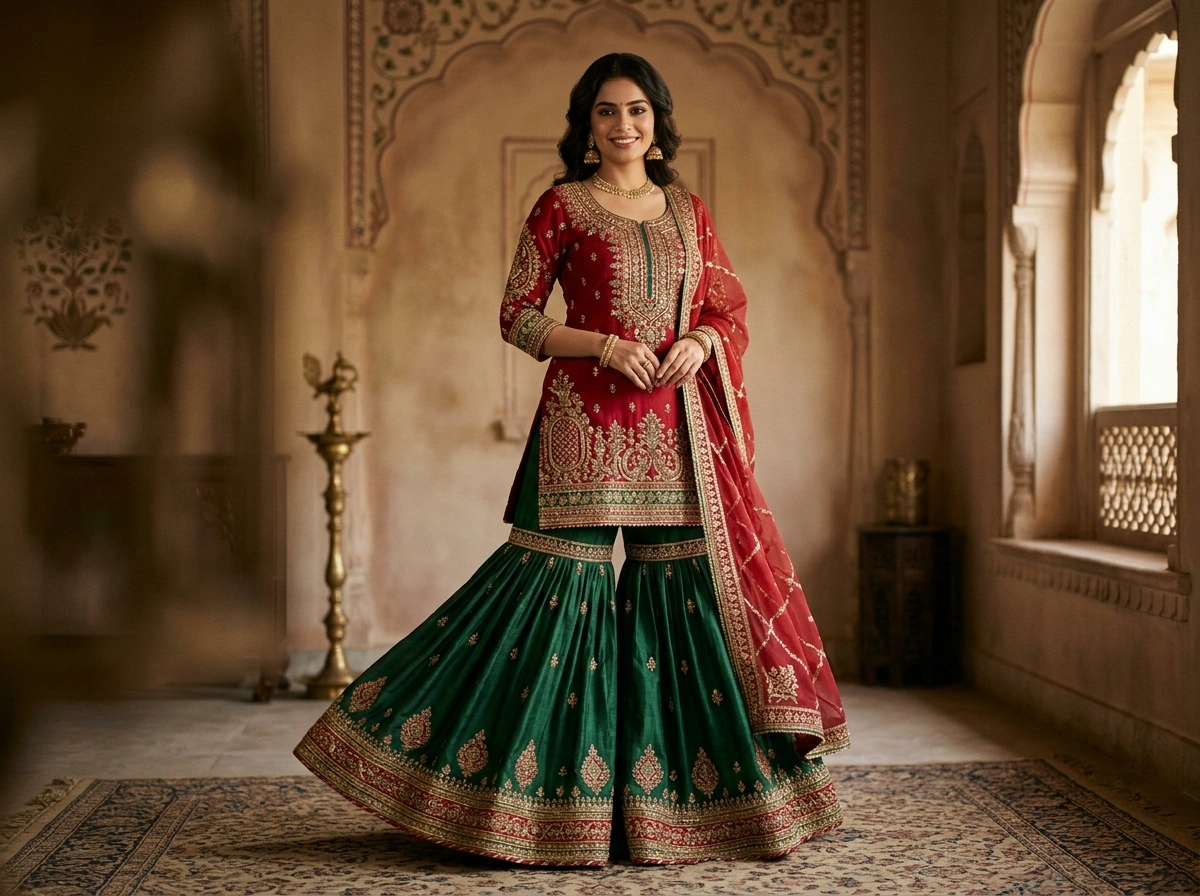
Few garments carry the kind of story the sharara tells. With its sweeping, flared legs and graceful silhouette, this beloved outfit moves between past and present with ease. It speaks of royal courts and family weddings, yet it feels right at home on today’s runways and social feeds. For many women, the sharara is more than clothing—it’s a connection to roots, a celebration of artistry, and a bold expression of who they are.
Let’s explore where this stunning ensemble came from, how it’s made, and why it continues to win hearts across the globe.
Where It All Began: The Historical Origins
The sharara traces its roots to the noble households of the Awadh region in northern India, particularly around Lucknow, during the era of the Mughal and Nawabi courts. Women of high standing wore wide, flowing trousers that fanned out from the knee, paired with a fitted top and an elegant dupatta draped over the shoulders. The look conveyed grace, status, and refinement.
The garment’s name comes from the way the fabric “splits” and flares below the knee, creating that signature dramatic flow. In its early days, the sharara was reserved for celebrations and special occasions—think weddings, festivals, and royal gatherings. Yards of luxurious silk and rich brocade went into each piece, making it a treasured part of a woman’s wardrobe.
Over generations, the style spread across South Asia and beyond. It became a staple in Pakistani and Indian bridal culture, passed down from mothers to daughters as both heirloom and tradition. Each region added its own flavor, but the core spirit stayed the same: a celebration of femininity through movement, color, and craft.
The Art Behind the Garment: Traditional Craftsmanship
What truly sets the sharara apart is the skill woven into every inch of fabric. These pieces are rarely just stitched together—they’re created by artisans whose techniques have been refined over centuries.
Some of the most cherished elements include:
- Zardozi embroidery – Intricate metallic threadwork, often using gold and silver, that adds shimmer and dimension.
- Gota patti – Delicate appliqué work using ribbon-like trims, popular in festive and bridal designs.
- Chikankari – Fine white-on-white hand embroidery from Lucknow, prized for its subtle elegance.
- Mirror work and beadwork – Reflective accents that catch the light and bring the outfit to life.
A single richly decorated sharara can take artisans weeks, sometimes months, to complete. This dedication to detail makes each piece feel personal and irreplaceable. When you wear one, you carry the work of hands that have honored these crafts for generations.
That human touch matters more than ever. In a world full of fast, mass-produced clothing, the sharara stands as a reminder of slow, intentional artistry.
A Fresh Take: How Modern Designers Reinvent the Sharara
Tradition is the foundation, but today’s designers are giving the sharara exciting new life. Contemporary fashion houses and independent creators are reimagining the silhouette for women who want both heritage and a modern edge.
You’ll now find sharara sets in unexpected fabrics like georgette, organza, and crepe, which offer easier movement and a lighter feel. Color palettes have expanded too. Beyond the classic reds and golds, designers play with pastels, jewel tones, metallics, and even bold monochrome looks.
Cuts have evolved as well. Some versions pair the flared pants with crop tops, structured blazers, or shorter peplum tops for a fresh, fusion vibe. Others keep it minimal, letting clean lines and quality fabric do the talking. This flexibility is exactly why younger generations have embraced the style—it adapts to personal taste without losing its identity.
Online boutiques have made these designs easier to access than ever. A well-crafted sharara dress can now reach women across continents with just a few clicks, bridging cultures and bringing this timeless style to new audiences.
Styling Tips: Making the Sharara Your Own
One of the best things about the sharara is how versatile it can be. Whether you’re attending a wedding, a festive party, or a casual celebration, here are some ways to style it beautifully.
For formal events:
- Choose a heavily embellished set in a rich color like deep maroon, emerald, or royal blue.
- Add statement jewelry—jhumkas, a maang tikka, or a layered necklace.
- Finish with heels and a soft, elegant updo.
For a modern, fusion look:
- Pair flared sharara pants with a fitted crop top or a tailored shirt.
- Skip the dupatta for a sleeker, contemporary feel.
- Add minimalist gold accessories and pointed flats or block heels.
For daytime or casual wear:
- Opt for lightweight cotton or georgette in soft pastels.
- Keep makeup natural and jewelry understated.
- Comfortable wedges or embellished sandals work perfectly.
A few practical tips: balance the volume of the pants with a more fitted top to keep the look polished. Pay attention to length, since the flared hem should fall gracefully without dragging. And don’t be afraid to mix textures—a smooth top against an embroidered bottom can create lovely contrast.
Going Global: The Sharara’s Rising Popularity
The sharara has crossed borders in a big way. Once tied closely to South Asian communities, it now appears at multicultural celebrations, fashion shows, and special events around the world, including across the United States.
Several factors fuel this rise. Social media has played a huge role, with influencers and celebrities showcasing their looks to millions. Major cultural events and festivals create fresh demand each season. And as people everywhere grow more curious about diverse traditions, the sharara offers a beautiful entry point into rich heritage and craft.
For the South Asian diaspora, the garment carries deep meaning. Wearing a sharara at a family wedding or holiday is a way to stay connected to one’s roots, even thousands of miles from home. For others, it’s an appreciation of artistry and a chance to celebrate global fashion in a respectful, joyful way.
The growth of online shopping has made all of this possible. Women can now explore countless designs, compare styles, and find pieces that suit their region, budget, and taste. This accessibility has helped the sharara become a truly worldwide phenomenon rather than a regional secret.
A Symbol That Endures
The sharara dress is so much more than a fashion choice. It’s a thread that ties history to the present, craft to creativity, and tradition to personal expression. Its journey from the courts of Lucknow to closets across the globe shows just how powerful a single garment can be.
Whether you’re drawn to its royal history, its breathtaking handwork, or its fresh modern interpretations, the sharara invites you to celebrate femininity on your own terms. It honors where you come from while letting you shine in the here and now.
As more women discover and embrace it, one thing is clear: the sharara isn’t just surviving—it’s thriving. And it will keep flowing, beautifully, for generations to come.